


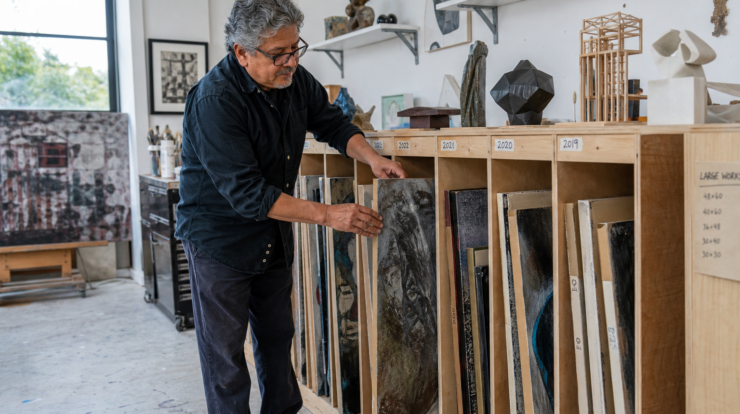
One of the most persistent challenges in any creative studio — and especially for artists who regularly produce and move inventory — is art storage. Artwork tends to fill whatever space you give it, and without a thoughtful plan, you can quickly end up with a chaotic backroom or a studio floor overrun with canvases, frames, and sculptural works.
Many artists and galleries struggle with conventional storage solutions or commercial shelving that’s either prohibitively expensive or ill-suited for fragile artwork. I've seen artists turn to custom-built racks and cubbies, crafted from inexpensive materials like plywood and two-by-twos, that provide efficient, scalable, and long-lasting storage options — without breaking the budget.
Case Study: The Plywood and Two-By-Two Solution
A typical approach starts with measuring your largest pieces and the available studio or backroom space. From there, build simple open crates or bins by screwing together plywood sides and two-by-two reinforcing struts. The result is stackable, modular boxes: strong enough to support the weight of large paintings or heavier sculpture bases, but adaptable as your inventory evolves.
Practical lessons have emerged over the years:
- Cardboard or foam core dividers placed between each artwork can prevent accidental scuffs or punctures (critical for framed pieces).
- Plastic wrap or protective sleeves add an extra layer of safeguard, especially for delicate frames — a bit of prevention that can save costly repairs.
- Label everything. Whether you use digital records or simple crate stickers, knowing exactly where any given piece is stored saves hours of hunting — and keeps you ready for impromptu collector visits or gallery needs.
Shelving & Wall-Mounted Display Racks
Not every artist has unlimited floor space. Wall-mounted display shelving is another practical solution. A ledge shelf with a lip (about four inches deep) allows you to lean and layer works safely, while easily rotating pieces in and out for visibility. This is especially effective when you use your studio as both workspace and showplace — maximizing every square foot.
Organization Means Efficiency
Disorganization compounds over time: stacks get shuffled, labels disappear, and soon pieces go missing or risk damage as you move them around. Take a cue from professional galleries: schedule a regular (yearly or even seasonal) overhaul. Clear out each box or rack, dust and clean, re-catalog, then restack with intention. This annual "reset" can transform your storage from overwhelming to manageable.
Uniform Sizing Brings Unexpected Benefits
While artistic freedom sometimes demands custom sizes, standardizing at least some of your artwork dimensions pays dividends. Uniform pieces stack more safely, fit better in modular storage, and simplify packaging for shipping — not to mention reducing costs on materials.
A Modest Investment, Big Returns
Building your own racks or cubbies isn’t about frugality alone; it’s an investment in your art business. Durable storage preserves the condition of your work. Organization speeds response time when opportunity knocks. And efficient use of your space keeps your creative energy focused where it should be: on making and selling art, not fighting clutter.
Takeaway:
Don’t wait until your artwork outgrows your studio to address storage. Even a weekend’s investment in simple plywood racks or wall shelves can make a transformative difference. Protection, order, and efficiency gained today will compound many times over as your inventory (and your art business) grows.
Question for Readers:
What’s been your most effective (or creative) storage solution for art? If you’ve built your own racks or cubbies, what worked — or didn’t — for you? Share your experience and advice below.
