


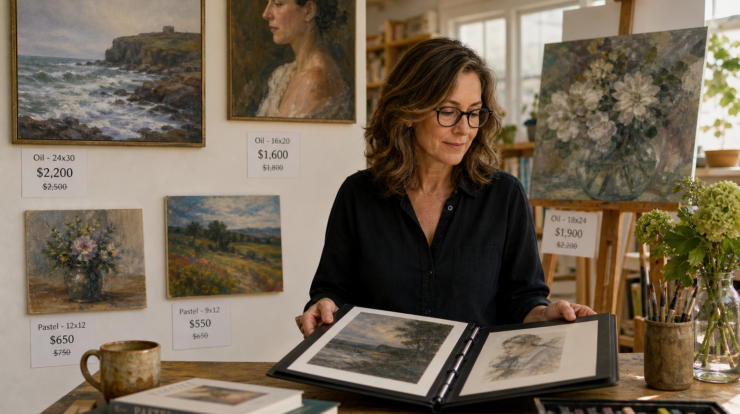
A Practical Framework for Raising Your Art Prices—Without Losing Collectors
Raising your prices is both a rite of passage and a source of anxiety for working artists. You might wonder: Is this the right time? Will loyal collectors balk? What if I work in two different media? As a gallery owner who has guided many artists through the process, here is the straightforward framework I recommend for sustainable and strategic price increases.
1. Monitor Your Sales Velocity
The best signal it's time to raise your prices? Consistent and increasing sales. If your work is selling steadily—whether through galleries, online, or at fairs—it’s reasonable to consider a price adjustment. I recommend re-evaluating every year to 18 months if your work is moving. If sales have dried up, focus first on expanding exposure, not on price tweaks.
2. Incremental, Predictable Increases
Avoid sticker shock—raise prices in measured increments rather than dramatic jumps. A typical, digestible increase is 5-15%. Regular, small adjustments help train collectors to expect gradual appreciation rather than surprise hikes. I’ve seen artists who hold prices flat for too long and then feel forced to make large, disruptive corrections. The goal is steady, predictable growth that feels normal to both you and your buyers.
3. Apply Increases Across the Board
When you raise your prices, do it for all galleries and venues you exhibit with, for all collectors, and for all pieces (unless you are phasing out older work). Consistency breeds trust. Avoid the temptation to leave prices lower at shows or in particular galleries—collectors do notice, and inconsistent pricing undermines both you and the venues representing you.
4. Research Comparable Artists
Compare your prices to those of peers in similar media, style, experience, and market exposure. Be honest: Are you priced in line with artists at your level, or trailing behind? Ample market research can guide justified increases and prevent pricing yourself out of (or beneath) your true market.
5. Navigating Multiple Media
It’s common to work in more than one medium—say, oils and pastels. Should both be priced the same? Not necessarily. Market norms often dictate higher prices for certain media (e.g., oil over pastel). Check how other cross-media artists structure their pricing, especially those with consistent style across media. But keep your rationale clear and fair: If your pastels and oils are similar in size and style, and the difference is only medium, a differential may make sense. But greatly diverging price points on visually similar work can confuse buyers. Consistency and clarity matter more than rigid rules.
6. Communicate Value, Not Apology
Collectors understand that as artists grow in recognition, skill, and demand, prices will follow. If you approach increases without apology, buyers will often accept them as a sign of your professional trajectory. If a collector voices concern, confidently share your rationale (e.g., stronger demand, growing resume, or improved materials)—but avoid defensiveness.
7. Be Wary of Large One-Time Jumps
An abrupt, major price increase can cool off sales and confuse collectors. If your prices have been flat for years, catch up over two or three cycles, not all at once. Conversely, don’t feel pressure to raise prices on a strict schedule if your sales haven’t grown.
8. Document Your Pricing Policy
Even if it’s just for your own use, develop a simple pricing policy or formula. Many artists use a price-per-square-inch approach for consistency across sizes. Build in modest increases as milestones are reached.
Takeaway:
Raising prices is a normal and healthy part of an artist’s career. The key: make changes gradual, market-driven, and transparent. Regular reviews keep your prices relevant and sustainable, without alienating your hard-earned collector base.
Question:
How often do you revisit your pricing? Share your approach or challenges with increasing prices in the comments below.

I revisit prices once a year overall. Make adjustment as needed. I don’t announce a price raise. It gets posted on my website. No one has ever taken issue. It is just part of having a business.
The advice to raise prices gradually rather than making sudden jumps makes a lot of sense. I particularly like the emphasis on keeping prices consistent across galleries and sales channels. That transparency helps build trust with collectors while allowing artists to grow sustainably.