


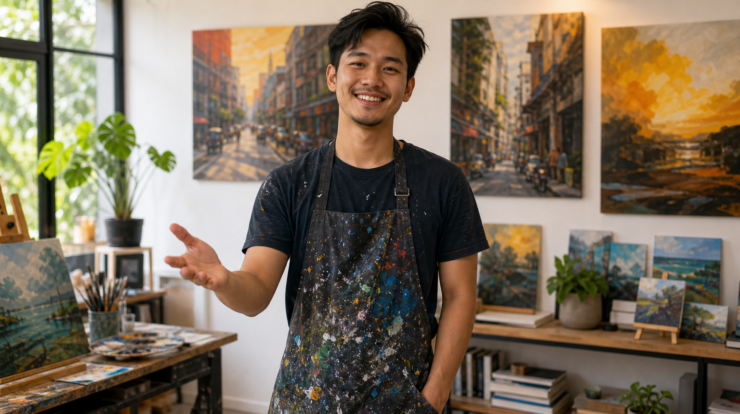
Open studio tours are a staple of many artists’ yearly calendars—and for good reason. These events pull art lovers out of their routines and into artists’ working spaces, creating a unique bridge between artist and collector that a traditional gallery rarely matches. But for artists hosting a studio tour for the first time, the details can be daunting—how do you make the experience inviting (without being disruptive), market the event effectively, and, ultimately, turn visitors into buyers?
After watching countless artists navigate open studio tours, I’ve distilled what works into a straightforward framework. Here’s a checklist you can use every time you open your doors:
1. Start With a Clean, Safe, and Welcoming Space
- Tidy up: Ensure your studio is presentable and clutter-free.
- Good lighting: Natural light is best, but supplement with lamps if needed so artwork is easy to see.
- Clear hazards: Tape down cords and keep walkways unobstructed—comfort and safety are non-negotiable.
2. Prepare and Present Your Work Professionally
- Display variety: Hang your strongest pieces at eye-level, but include a range of price points and formats (originals, prints, small works).
- Easy labeling: Include clear, attractive wall labels with title, medium, size, and price.
- Inventory list: Have a simple, up-to-date list for your own use—this helps for answering questions and closing sales.
3. Plan the Visitor Experience
- Clear signage: Use outdoor and indoor signage to direct visitors—don't make people guess which door to enter.
- Hospitality counts: Offer light refreshments (even better if you can legally serve a glass of wine, which tends to encourage browsing).
- Be accessible, not pushy: Be available for questions without hovering. Allow visitors some room to explore.
4. Market Early, Market Often
- Create a Facebook event: Social media—especially Facebook and Instagram—are critical. If you use Facebook’s event ad features, highlight the hospitality (refreshments, live demo, etc.)
- Email your list: Send a clear invitation at least twice: once two weeks out, again a day or two before.
- Work with tour organizers: Coordinate promotion with the official event, but don’t rely solely on their efforts.
- Leverage word-of-mouth: Personal messages still make a difference. Invite regular collectors or friends individually.
5. Streamline Sales and Follow-Up
- Point-of-sale ready: Keep your payment system functional—whether it’s a card reader, PayPal, or old-fashioned cash.
- Display prices confidently: Don’t hide them; buyers want clarity.
- Collect email addresses: Offer a drawing or exclusive preview to encourage sign-ups for your mailing list.
- Follow up after the event: Send a thank-you email to everyone who visited, with photos or highlights from the day and a gentle reminder of available works.
The most successful open studios are the ones that make visitors feel welcome, give them something interesting to talk about, and make it easy to buy. With some planning and these best practices in place, you can set the tone for fun—and profitable—open studio days.
Takeaway: A successful open studio isn’t about luck; it’s about preparation and thoughtful engagement before, during, and after the event.
Question: What’s one strategy or small touch you’ve used (or experienced) at an open studio that made a big difference? Share below—your tip might help another artist create a memorable event.
