


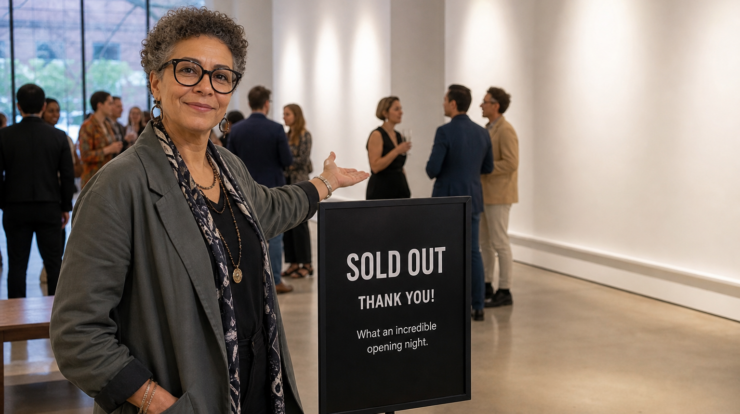
Sold-out gallery shows are among the rarest milestones in the art business. Most artists—and even most galleries—will never experience the entire inventory of a show reserved before opening night. But what happens when you do?
Not long ago, I spoke with an artist who found herself in exactly this situation. Instead of basking in the excitement of her accomplishment, she was anxious. Her concern: if nothing is left to purchase, won't visitors and supporters feel let down? Would the gallery expect her to quickly create new work to fill the empty spaces?
This reaction is more common than you’d think. As thrilling as a sellout can be, the rush of validation often gives way to fear: fear of disappointing eager collectors, fear of appearing unprepared, or fear of "wasting" the moment. But from a gallery-owner’s perspective, resisting the urge to replenish—and keeping strategic control of the situation—can transform panic into lasting success. Here’s how to handle it, step by step.
Lean Into the Rarity
First, recognize just how special this is. Scarcity and exclusivity are powerful reputational tools. If your entire show sells before opening, you’ve signaled to the market that your work is in high demand. Fast restocking, or padding the walls with new, less intentional work, can actually devalue your show’s narrative and undermine the excitement you’ve created. Instead, let the buzz build and don’t apologize for your achievement.
Communicate—With Collectors and Visitors
One practical strategy we employ in my gallery when a significant amount of work sells before the official opening is to request from buyers that we be allowed to keep the purchased pieces on display through the event. Most collectors are happy to comply, understanding that the exhibition is part of the artist’s career story. This allows all visitors to enjoy the full show as envisioned, share in the excitement, and connect with the narrative of a sold-out opener. Then, after the opening, we arrange prompt shipping to their homes.
Be up front with guests that the show is sold out—but welcome them to experience the art, meet the artist, and join the community. A sold-out show can actually drive anticipation for your next series or exhibition.
Engage Instead of Apologize
It’s easy to feel you owe visitors or collectors an apology for not having available work. Instead, use this opportunity to build new connections:
- Start a waiting list for those eager to buy. Personally invite them to the next show, or offer previews of upcoming work.
- Share the story behind the rapid sales—not as a boast, but as a testament to demand and your collectors’ excitement.
- Accept commissions—cautiously. Only if they truly align with your creative direction and schedule, to avoid overextending yourself.
Preserve Your Reputation and the Show’s Story
The best galleries and artists don’t scrabble to fill walls in a moment like this. Standing behind the intentionality of the show strengthens your reputation. An exhibition that sells out pre-opening becomes lore—a benchmark collectors and peers will reference for years.
Takeaway
If you ever find yourself on the cusp of a sold-out exhibition—a rarity for any artist—stand firm. Don’t rush new work into the gallery. Work with your gallerist to keep sold pieces through the opening so everyone can experience the full show. Celebrate your success, engage personally with new and old collectors, and leverage the moment to build anticipation for what comes next. True long-term value comes from managing rarity wisely rather than diluting it.
Question: Have you attended or participated in a sold-out art show? Did you feel the artist and gallery handled it well? What would you do differently?
