


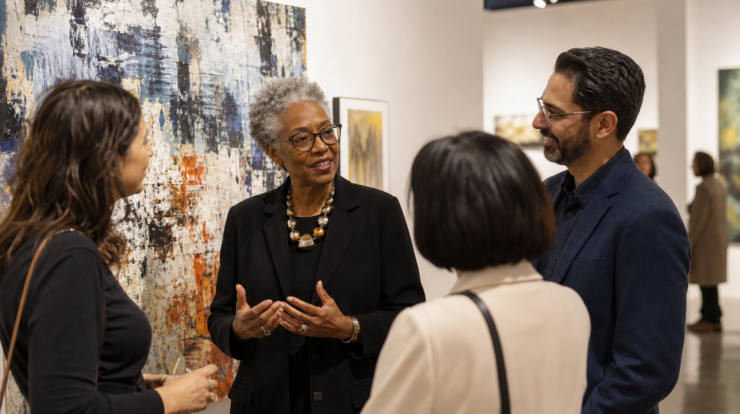
One of the more nuanced decisions artists face is whether to participate in groups formed for art collectors—particularly those who collect in your medium. With the right approach, these communities can be an excellent source of insight, connection, and opportunity. However, they also require careful navigation to avoid the trap of coming across as self-promoting.
Where might you find these collector groups? Some are formal organizations associated with museums, major arts non-profits, or professional societies. Others are more grassroots: local meetups, online forums and social media circles (Facebook, Discord, or private Slack channels), art fair VIP programs, or even special-interest mailing lists. Gallery-hosted collector evenings and regional “friends of the arts” associations also fall into this category.
The Opportunities
1. Perspective From the Collector Side:
Collector groups offer a rare chance to listen in on what buyers care about—how they find art, what excites them, what turns them off, how they build relationships with artists and galleries. This kind of unfiltered market feedback is hard to get from behind your studio door.
2. Relationship-Building:
Artists who approach these groups as peers—not just as sellers—can build connections leading to sales, commissions, and referrals. Many collectors love learning about an artist’s process or inspiration, but only if it’s offered as part of genuine conversation rather than a sales pitch.
3. Educational and Visibility Opportunities:
Events, studio tours, talks, and collector panels can bring you up to speed on trends and decision-making among serious buyers. Your presence alone puts your name in front of influencers and advocates in your niche.
The Pitfalls
1. Self-Promotion Temptation:
It’s easy to slip into pitch mode when you know you’re surrounded by your target audience. Resist the urge. Savvy collectors quickly pick up when an artist is more interested in selling than contributing.
2. Perceived Inauthenticity:
If collectors sense your involvement is transactional—“I’m here for sales only”—trust will suffer. Word travels fast in close-knit groups. Your best reputation-builder is honest engagement, not relentless sharing of your own work.
3. Time Commitment:
If you join, do so with the intention to participate: attend events, share experiences, and interact beyond talking about your art. Collector circles reward relationship-building, not “drive-by” postings.
Where and How to Engage Collector Groups
- Start Local: Museum supporter circles, local arts foundations, and regional "friends of the arts" groups often welcome artists willing to engage as equals. Attend events, panels, and open houses to make personal connections.
- Online Platforms: Search for collector-focused Facebook groups, artist/collector Discord servers, and even professional association forums. Look for ones with active discussions, strong moderation, and clear community norms.
- Gallery and Art Fair Programs: Many galleries and major art fairs offer VIP collector nights or host regular collector events. Offer to participate as a speaker, or simply attend as a community member.
- Professional Societies & Nonprofits: Organizations related to a medium (ceramics, glass, painting, etc.) often have subgroups or events for collectors. Inquire about membership requirements for artists and be transparent about your interest in learning—not just selling.
Best Practices for Artists
- Be a Participant, Not a Pitcher: Contribute to discussions about collecting, trends, or fellow artists. Offer perspectives, ask questions, and only mention your own work when relevant to the conversation.
- Let Your Reputation Travel: Be open about your practice if asked, but let fellow members discover your art organically. Reputation built through positive interactions often results in the best leads.
- Respect Boundaries: Read group guidelines carefully. When in doubt, err on the side of undersharing about your own work.
- Value the Long Game: The richest rewards come from authentic, long-term relationships. Prioritize trust and camaraderie over quick sales.
Takeaway
Collector groups can be a goldmine for insight and connection, but artists get the most out of them by participating as colleagues, not as marketers. Start by finding groups where you’d feel comfortable as a peer, then contribute with curiosity and restraint. Long-term relationships—not aggressive self-promotion—lead to real opportunity.
Question: Have you joined a collector group or arts support organization? Where did you find it—and what advice would you share with fellow artists who want to participate authentically?
